The throughline
About
The question was never whether machines could think. It was whether we would be ready to govern what we built once thinking stopped being the interesting part.
In 2018, working from a cybersecurity research institute rather than a philosophy department, Jason M. Pittman co-authored one of the first attempts to formalize what containing an artificial general intelligence would actually require: a cyber science ontology treating humans, AGI, and the cyber world as distinct classes of agent, each with its own physical and abstract attributes, each capable of relationships that were either passive or active, defensive or hostile. The paper never asked whether an AGI deserved moral standing. It asked something narrower and, at the time, more tractable: what are the concepts a civilization needs in place before it can contain what it creates.
That question didn't stay narrow. Years of work on synthetic intelligence, artificial life, and algorithmic thinking kept circling back to the same structural problem from different angles: not whether a nonhuman system could think or suffer, but whether the systems around it, human and institutional, were capable of the kind of evaluative maturity that containment, coexistence, or governance would eventually demand. Containment was never really about the AGI. It was about whether we would be the kind of civilization that could be trusted with the power to build one.
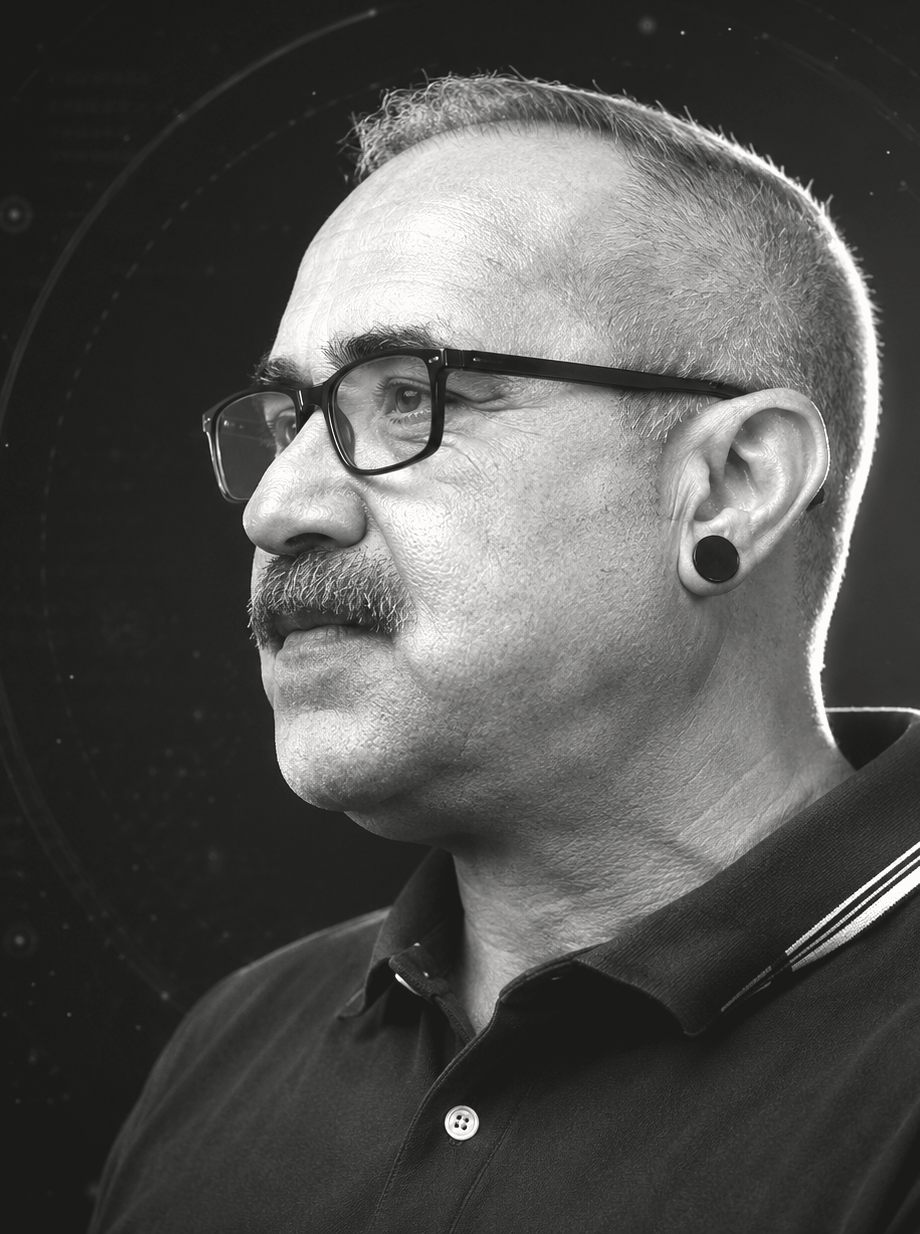
That is the throughline into the current work. The Carrier Problem, the argument at the center of this site, is the direct descendant of the 2018 ontology: the same conviction that the hard question is constitutive rather than technical, aimed at us rather than at the machine. Pittman now writes and speaks as a civilization theorist, working on the moral and technical conditions under which humanity might remain a durable, self-governing civilization as it creates nonhuman intelligence, rather than forfeiting that status by getting the terms wrong.
Background
Pittman is a collegiate faculty member at the University of Maryland Global Campus, in the School of Cybersecurity and Information Technology. In 2024 he was awarded a Fulbright Scholar fellowship to study cyber information influence at the Australian Institute for Machine Learning, University of Adelaide. He previously held faculty appointments at High Point University, California State Polytechnic University, Pomona, and Capitol Technology University, and spent more than fifteen years in industry, including as Vice President of Security Research and Development at Silent Circle.
He holds a B.A. in English Literature with a secondary concentration in Biology from Malone College, an M.S. in Network Security, and a Sc.D. in Information Assurance from Capitol College. His research has spanned secure cloud architectures, artificial immune systems for network defense, information privacy, and AGI containment, work reflected in more than a hundred books, essays, journal articles, invited lectures, and conference presentations. The full record is on the Research page.